
Szczegóły
Compare common BJD scale conventions and learn why exact measurements matter more than size labels.
Why scale labels vary
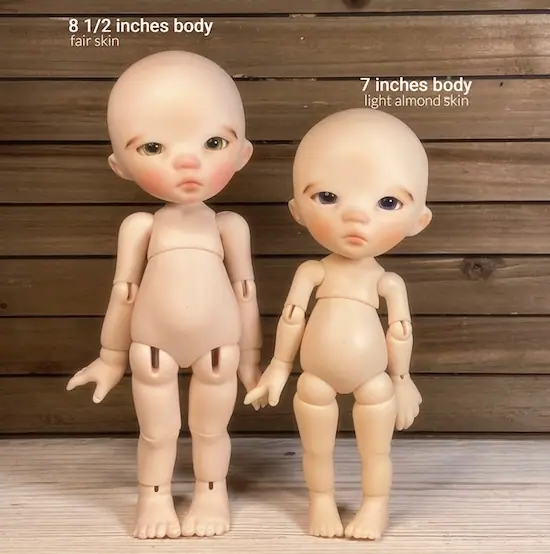
BJD scales such as 1/3, 1/4 and 1/6 are broad hobby conventions, not a universal manufacturing standard. A slim adult character and a chubby childlike sculpt may be described with the same nominal scale while having very different head, chest, hip and hand measurements. Height alone does not guarantee compatibility.
The practical differences
Many 1/3 dolls are large display pieces that need substantial storage and carefully sized furniture. The 1/4 range often balances expressive posing with more manageable carrying size. Smaller 1/6 dolls can be easier to transport but sometimes require finer clothing construction and tiny fasteners. Fantasy bodies and anthro forms fall outside simple charts.
Measure the actual doll
Record height, head circumference, neck size, shoulder width, bust or chest, waist, hips, arm length, inseam and foot dimensions. For a wig, compare head circumference in centimeters rather than assuming every doll in one scale takes the same wig. For shoes, foot length and width are the deciding figures.
Choosing based on use
If you photograph dolls on location, think about carrying weight, stands and the amount of space available for posing. If you primarily sew, choose a body with accessible measurements and established pattern support. When comparing new releases, CATDOLL highlights the configuration details that are worth verifying.
Komentarze (0)